
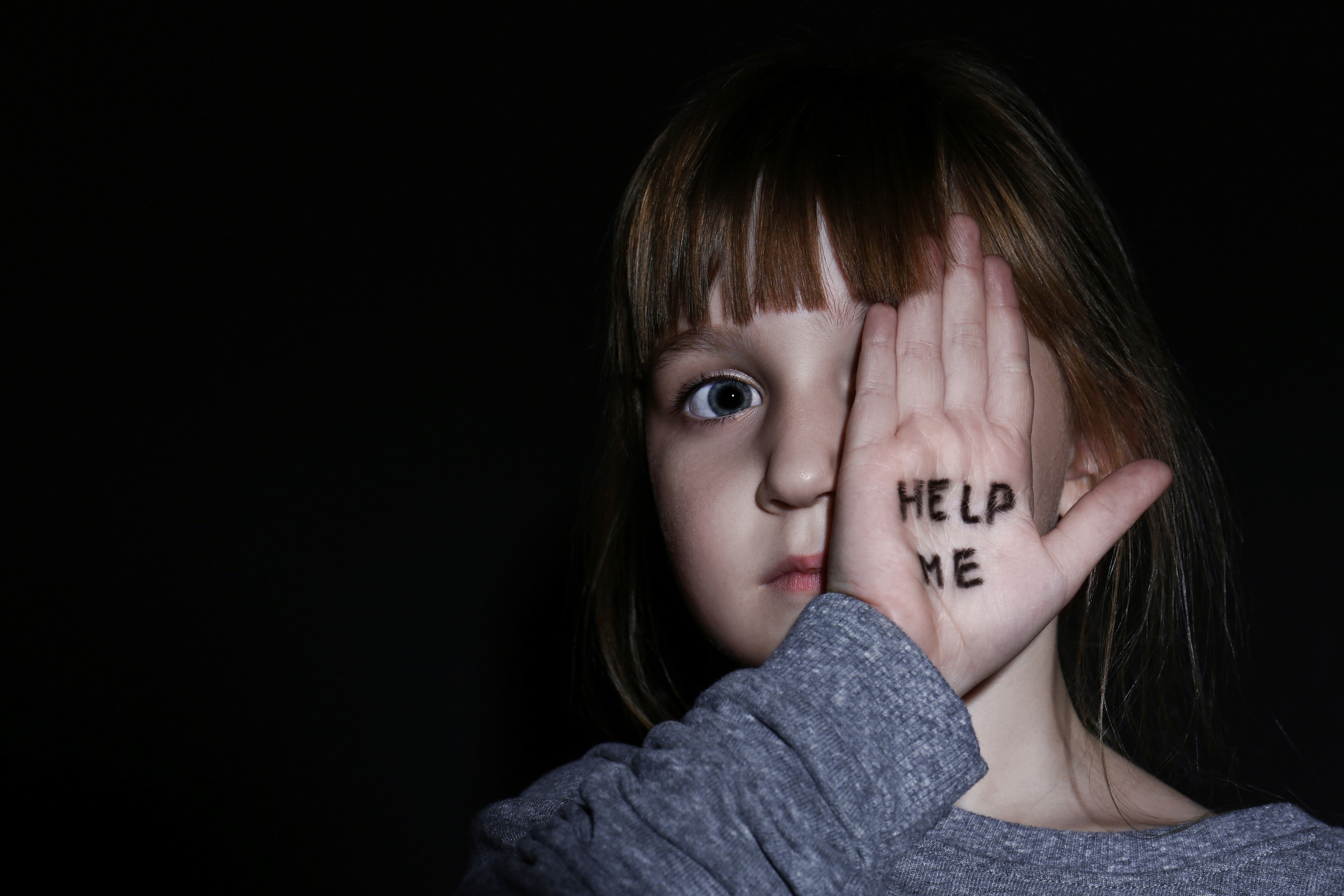
It doesn’t really matter what political affiliation or religion you identify with, almost everyone wants to know who the pedophiles are. And of course we do. Nothing less than the safety and the very lives of children are at risk.
But sometimes it can seem that we are more focused on the salacious stories than we are on solutions.
Case in point, despite his death, Jeffrey Epstein’s pedophilic perpetrations and the various suspicions about the people he associated with, continue to have a life of their own. Somehow, the wellbeing of the survivors seems to take a back seat to the conspiracy theories.
But at least it has us talking about pedophilia.
Not so long ago, the sexual abuse of children remained mostly hidden in the shadows of shame and secrecy. But in the 80’s that changed. I was part of the feminist movement that brought the topic of incest and child molestation into the open where hopefully it could be addressed in a way that would protect children.
But what was meant to be a healing moment for society, predictably morphed into a moral panic with the McMartin daycare scandal in 1983. That was followed by the “Satanic panic” of the 90’s. In 2016, we were subjected to the insanity of Pizzagate which somehow led to QAnon. Now we have the MAGA movement calling for the release of the Epstein files because they are convinced the Democrats are a “party of pedophiles.” Meanwhile, there are equally vociferous claims from the liberal side, that Trump himself is a pedophile.
It’s a strange moment in time for me. I remember when child molesting was quickly swept under the proverbial rug in an effort to protect the reputations of those who abused children. It took many courageous survivors to raise this topic to the surface and wake society up to the seriousness of this crime. So, it feels relieving to know that most Americans now feel that child sexual assault must be stopped and that the reputations of those who harm children are not nearly as important as the welfare of children.
And yet, whether it’s “Satanic panic,” Pizzagate, QAnon or the Epstein files, none of this outrage does much to protect the vast majority of at risk children.
We must do better if we want to protect children. Child sexual assault ravages the childhoods of innocent children and can create serious obstacles to a healthy, happy life as the child matures into an adult.
I know this firsthand because my dad molested both my sister and me. And although I have healed immensely from decades of therapy and various other therapeutic modalities, it’s also true that I continue to find pockets of trauma that still require deep healing work.
Because I know personally how damaging child sexual abuse is, I am passionate about finding real solutions, even if I am still unclear what those solutions might look like. What I am clear about, is that we need a much more informed approach than the latest conspiracy theories contain.
Most of us use the word “pedophile” to refer to anyone who sexually molests or assaults a person under the age of consent. While I use the term that way too, I also know that doing so can create a lot of confusion that makes it even harder to protect children.
Why?
The short answer is that not all pedophiles are the same. The longer answer is worth a few minutes of your time. That deeper dive reveals some core problems in preventing child sexual assault.
Let’s start with the terms “fixated pedophile” and “regressed pedophile.” The former refers to someone who is only attracted to the bodies of children while the “regressed pedophile” is someone who is usually attracted to adults but has deviated from their norm and is now attracted to children. This often describes fathers who molest their own children.
And given these definitions, my dad would have been a “regressed pedophile” since he dated and married an adult woman. His sexual obsession with his daughters began very early in our childhoods but he didn’t touch us until we began to show signs of sexual maturation in puberty.
If my dad had been arrested for his perpetrations, he most likely would have been charged with child sexual abuse and incest. The legal system doesn’t really care about the psychological profile of the person who perpetrates and in many ways that is a good thing because the legal system’s focus needs to be on removing and prosecuting the people who are harming children.
And yet, as a society, we need to care about the psychological profiles of different kinds of pedophiles if we hope to be successful in protecting children from sexual abuse and assault.
For instance, there are homicidal and non-homicidal pedophiles. We often hear about the pedophiles who murder their victims. And yet, they constitute a substantially smaller portion of the pedophile population.
To be clear, one child murdered for any reason is both heartbreaking and deplorable. But the vast majority of pedophiles assault their own children or children they are related to. Except in extremely rare cases, they don’t murder them.
Importantly, one study found that 68% of “child molesters” had molested a family member; 30% had molested a stepchild, a foster child, or an adopted child; 19% had molested 1 or more of their biological children; 18% had molested a niece or nephew; and 5% had molested a grandchild.
Further, the vast majority (61% to 68%) of sexually abused children report that they were abused by a family member or a friend of the family.
Which begs the question, why are we looking outside of the home for pedophiles when most of them are in the home?
I think the answer to that question can be found in basic human psychology.
Two ways that humans protect themselves from uncomfortable facts is denial and projection. And learning that most child sexual abuse is occurring in the home, is a very uncomfortable fact.
Denial kicks in as soon as the data about child sexual assault is presented. Not only is most of it occurring in the home, it’s happening at a startling rate. One in four girls is sexually assaulted. That’s 25% of all girls. One in six boys are sexually abused. And up to 68% of those boys and girls are sexually abused by a family member or friend of the family. Many of us have difficulty wrapping our minds around that.
Most people will reflexively conclude that it can’t be a problem in their family or the families of anyone they know. After all, they reason, wouldn’t they be able to tell if someone they knew was molesting or assaulting children?
Wanting to address the problem but unable to confront the much more common issue of child sexual abuse in the home, most people are more likely to focus on pedophilia by strangers as the primary source of danger to children. They can feel outrage while pointing fingers at people they don’t know or associate with, which helps them feel safer. Given the fact that so many children are sexually abused by family or friends, this finger pointing is often an example of projection. It’s just too painful to believe that people who you know and care about might also be pedophiles.
Another psychological defense mechanism is repression. And this is what many survivors of child sexual assault do. Repression can be the only thing that helps a sexually abused child maintain some semblance of sanity and cope with their day to day life.
For this reason, it’s never wise or kind to try to force anyone to remember a horrific perpetration from their childhood. They will remember IF and when they are capable of dealing with the memory. And some people never will be.
Years ago, I attempted to “force” my mother to remember being sexually abused. My sister and I both suspected that she was a survivor because of how she tolerated the fact that our dad was molesting us. Eventually, I succeeded in breaking through her denial and she then remembered being sexually abused by her grandfather. Afterwards, she became horribly ill with pneumonia. Every day, I called to see if she was better and every day she greeted my phone call with a tearful “I don’t want to live anymore. Everyone has been molested and I don’t want to live anymore.”
I was deeply worried that my mother might die from her tortured memories. She might not have committed suicide but what if she had? I could never forgive myself for pushing her into remembering what her brain had wisely chosen to forget. So I stopped talking about her pedophilic grandfather and she gradually forgot it ever happened. Her health returned and she was her mostly happy self again.
Later in life, she remembered on her own, when she was in the grips of Alzheimer’s. Somehow, that disease allowed her to access memories of her grandfather “chasing her” when she was just a little girl. She told me that he eventually stopped coming after her because in her words “I got too old for him.” That revelation sent chills through me. But my mother wasn’t disturbed by these memories. She had remembered on her own when she was capable of dealing with the memories.
Unfortunately, a lot of survivors can’t remember what happened to them. And while some psychologists continue to wage their “memory wars,” many survivors are aware of having “forgotten” when they finally re-remember the horrific things done to them in childhood. Most survivors also understand how they may have minimized what happened at first, only to gradually come out of denial about the severity of the perpetrations as they become aware of how the trauma has shaped their health and their behavior.
But that is something those who seek healing learn about themselves. What about all the survivors who never get help to heal? Might they feel an inner rage about pedophiles without knowing that their rage is connected to something that happened to them?
There’s no way to know one way or the other. But I do find it an interesting possibility. We certainly know that child sexual assault is underreported, so the “one in four girls” and “one in six boys” statistics might be lower than what is true.
When I think of all the sexually abused children who are now adults and may not have gotten help to heal, my heart aches. It’s why I want to bring this topic out in the open, so more survivors can heal. But I also hope for a way to heal our families.
So far, we, as a society are not asking why sexual abuse of children occurs in so many homes. It’s like we are stuck in the “don’t ask, don’t tell” taboo. We can’t allow ourselves to even be curious about a potential problem in the home. And I have a lot of empathy for that.
After all, it’s heartbreaking to learn that people you know and love are sexually abusing the children you know and love. Every time I learned about an aunt or uncle or grandparent who molested or raped the children in our family, my heart broke.
But I’ve also learned to look at the pedophilia on both sides of my family with clarity. I see the crimes for exactly what they were. I understand the horrific damage done. And I know that most of my relatives were survivors, too.
Where does the tragedy stop?
With me, of course. I got therapy so I could heal the hurt. And with solid grounding in reality, I found my compassion for my dad and the rest of my family. Plus my rage. I needed both to heal.
I don’t know what healing families with incestuous child sexual abuse should look like. But I’m certain that simply sending parents to prison is not a long-term solution. In my case, every adult on both sides of my family either perpetrated or enabled child sexual abuse. Sending them all to prison would have done nothing to ensure that the next generation didn’t repeat the abuse that had been handed down from generations before.
As a society, we like to locate the “bad guy” and “punish” him. It satisfies our moral outrage. It feels like a simple solution to a problem. But when it comes to incestuous families, it’s not much of a solution at all.
And to be clear, I am very much in favor of stopping “the bad guys.” I also think that pedophiles who target the children of other people, are the most dangerous kind of predators. When they are released from prison, it seems that they almost always re-perpetrate. Maybe life sentences for “fixated” pedophiles (those who prefer the bodies of children) makes sense. Maybe the death penalty is fitting for pedophiles who murder.
But I don’t think it makes sense to hand life sentences to fathers who sexually abuse their children. Severe penalties could cause the secrecy and denial to persist. Families need better solutions. We need a healing path forward.
When we find that healing path forward, we will have made meaningful progress toward protecting children from sexual assault in the home, where the majority of this deplorable abuse actually occurs.
Decades ago, when I began healing from incest, I got help from a treatment program that worked with the entire family to heal child sexual abuse in the home. There was therapy for the parents and the children – for the those who perpetrated and those who enabled and those who were victimized. We don’t offer programs like that anymore.
Maybe they weren’t efficacious, but I suspect they just weren’t punitive enough for the majority of people.
Perhaps you know of a treatment model for the entire family that is still being used today?
Or maybe you are aware of something even better? If so, please drop a link in the comments below.
No matter what you feel about what I have shared here, I hope that you will share your thoughts and feelings in the comments.
I look forward to learning from your perspectives!
And of course, if you have been impacted by child sexual assault, you are welcome to share about that here too.
I also want to make sure that anyone who needs help has a resource for that at their fingertips, so be sure to click on this link if you want support for any type of sexual assault: https://rainn.org/